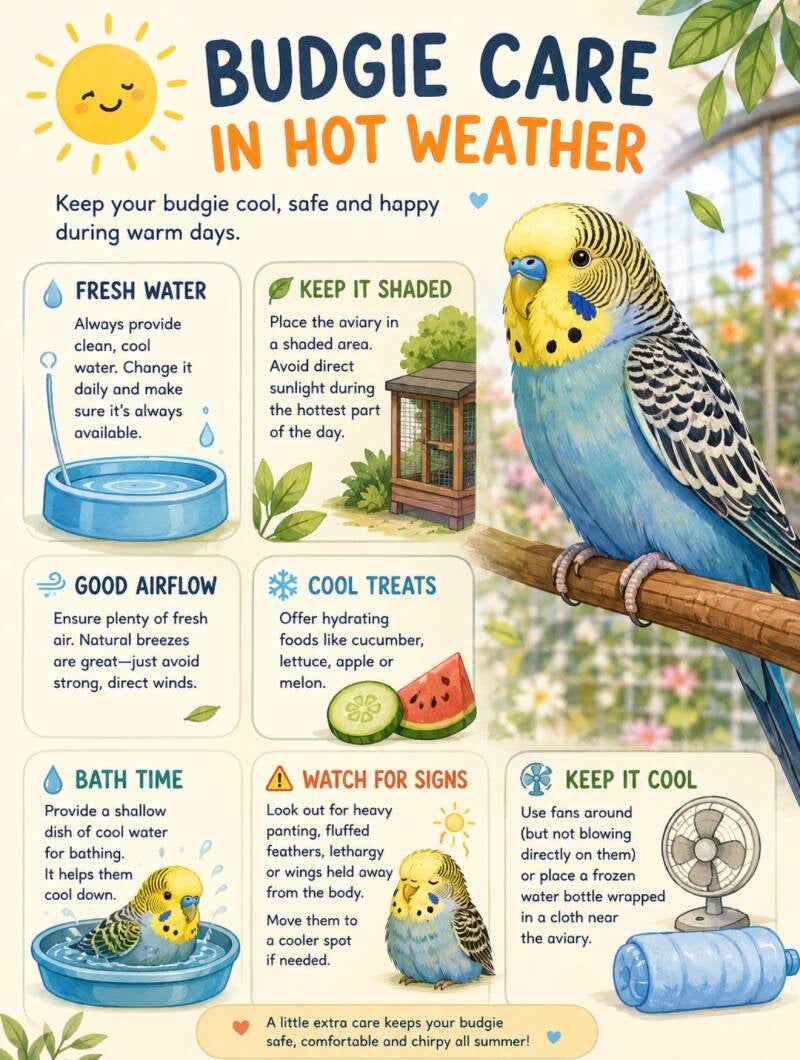
☀️ Hot Weather Advice ☀️
📍 Cage Placement
• Never in direct sun — sun turns cages into ovens; keep in shade/well-ventilated spot.
• Away from windows, radiators, appliances, or drafts; move to coolest room (ground floor is cooler).
• Outdoors: always have full shade; never leave unattended in sun.
💧 Water & Hydration
• Fresh cool water 24/7 — change 2–3x daily; glass/ceramic stays cooler.
• Shallow bath dish (1–2cm water) — many love splashing; clean daily.
• Light mist with room-temp water (50cm away, avoid eyes) — great for water-shy birds.
• Small ice cube in water dish is safe; no frozen food directly.
🌬️ Airflow & Cooling
• Gentle fan — indirect only; never blow straight at cage; circulate air.
• AC on low; avoid cold drafts.
• Cool perches: ceramic tiles, stone, or chilled (not frozen) objects inside cage.
• Damp towel near cage (not touching) to lower temp & add humidity.
🥗 Diet & Care
• Extra watery foods: cucumber, melon, lettuce, apple — helps hydration.
• Feed early morning/late evening; avoid midday activity.
• Keep cage uncovered; remove extra bedding/covers for airflow.
⚠️ Signs of Overheating → ACT FAST
• Open-mouth breathing, wings held out, panting, lethargy, sitting low.
• Action: move to shade, mist lightly, offer water, cool feet; vet if no improvement.
❌ Never Do
• Leave in cars (temp hits 40°C+ in mins).
• Direct fan/AC blast.
• Freeze toys/water too cold.
• Cover cage fully in heat.
Emergency 🚨 only
🚨 Emergency Overheating Checklist – Do These RIGHT AWAY
✅ 1. Move immediately – Carry cage/bird to the coolest, shadiest, best-ventilated room (ground floor is best). No sun, no drafts.
✅ 2. Lower body temperature gently
• Mist feathers lightly with cool (not cold) water – focus on back/wings, avoid face/eyes.
• Place cage next to (not touching) a damp towel, bowl of ice, or cool ceramic tiles.
• Let them stand on a cool, smooth surface (chilled perch/tile).
• Do NOT soak them fully or use freezing water – shock is dangerous.
✅ 3. Hydrate fast
• Offer fresh cool water; dip beak gently if they won’t drink on their own.
• Offer small pieces of cucumber, melon, or wet lettuce – high water content.
• Add an ice cube to their water dish to keep it cool.
✅ 4. Improve airflow
• Turn on a fan facing away from the cage – just circulate air, don’t blow directly.
• Open windows on opposite sides for cross breeze, if safe.
✅ 5. Watch vital signs closely
• ❌ Danger signs: open-mouth breathing, tail bobbing, wings held far out, panting, lethargy, unresponsiveness, seizures.
• ✅ Good signs: breathing slows, wings fold normally, becomes alert, drinks/eats.
✅ 6. When to call a vet
• If no improvement after 10–15 mins.
• If they’re unresponsive, trembling, or having trouble breathing.
• If they pass out or have convulsions.
❌ NEVER DO THIS in emergency:
• Put in fridge/freezer / douse with ice water / blow cold air directly / leave in car even 1 minute.